
Pigmentation doesn’t fade overnight. Anyone who tells you otherwise is selling you something that won’t work. But that doesn’t mean nothing happens — far from it.
When you use a well-formulated Vitamin C consistently, your skin begins responding almost immediately. The full transformation takes time, but the early signs show up much sooner than most people expect.
Here’s what actually happens when you commit to Vitamin C every morning for four weeks.
Week 1: Your skin feels different
The first change isn’t visual — it’s tactile.
Your skin feels smoother. Softer. More balanced.
This is your skin barrier settling. A good Vitamin C serum shouldn’t sting or strip. It works with your skin, supporting its natural defences rather than disrupting them. By the end of the first week, that comfortable, calm feeling after application becomes your new normal.
You may also notice your skin looks slightly more awake in the mornings. Nothing dramatic yet — just a subtle shift in how your skin starts the day.
That’s a good sign.
Week 2: Brightness begins
This is when the glow starts.
Not shimmer. Not shine. A genuine, healthy brightness that comes from skin functioning well.
Vitamin C is a powerful antioxidant. Over the first two weeks, it’s been neutralising free radicals and protecting your skin from daily environmental damage. Once that protection builds, it starts to show.
Your complexion looks brighter and more alive.
People might even ask if you’ve been on holiday.
Week 3: Tone starts to even out
By week three, the brightness from week two deepens into something more uniform.
This is Vitamin C doing what it does best: helping interrupt excess melanin production. It’s been working on this since day one, but pigment-related changes take time to reach the surface.
At this stage, your skin looks healthier overall. The contrast between lighter and darker areas begins to soften. You’re not finished yet, but the direction is clear.

Week 4: Dark marks start to shift
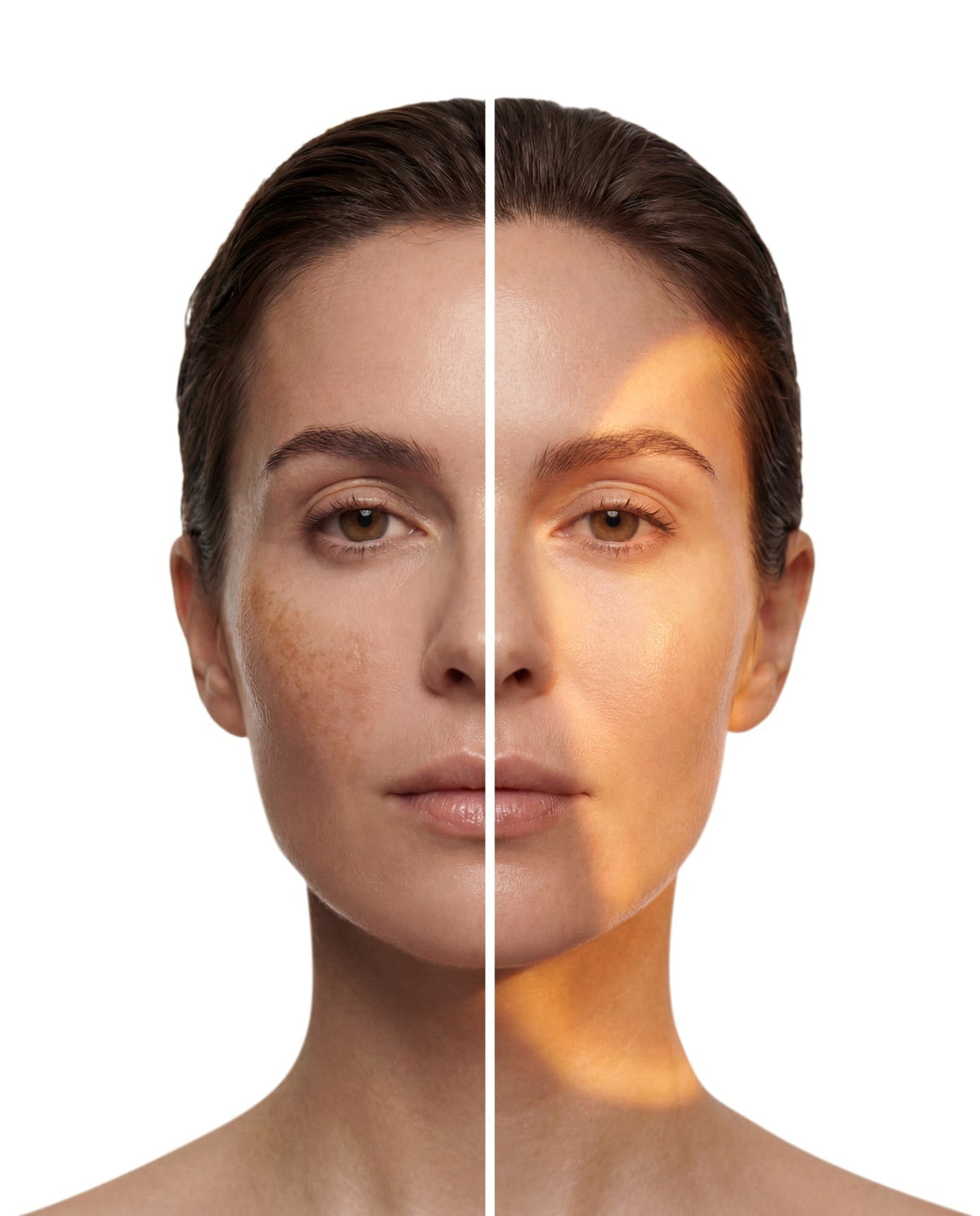
Four weeks in, changes in your dark marks become noticeable.
They’re not gone completely, but they begin to soften. Edges look less defined. Colour appears less intense.
This is the beginning of visible fading.
Your skin has been renewing itself throughout this process, and the newer skin reaching the surface has been forming under the daily protection of Vitamin C. If you’ve been taking photos, compare week one to week four — the difference is visible.
Real results take time
Every skin is different. Some people see faster changes, others slower. Deeper pigmentation, such as melasma, often takes 8–12 weeks to fade significantly.
But the pattern is consistent:
- Texture improves first
- Brightness follows
- Tone evens out
- Dark marks fade gradually
Why does it take this long?
Your skin renews itself approximately every 28–40 days.
The surface you see today was forming weeks ago in the lower layers of your epidermis. When you apply Vitamin C, it starts working immediately — neutralising free radicals, helping inhibit the enzymes involved in melanin production, and supporting skin repair.
But those changes happen at a cellular level first. It takes a full skin cycle for that work to become visible on the surface.
This is why consistency is critical.
A gentle, stable Vitamin C used daily will always outperform a harsh, high-percentage formula used sporadically. Your skin needs regular support to break the pigmentation cycle.

Vitamin C and sensitive skin: your questions answered
Vitamin C is one of the most effective ingredients for pigmentation — but if you have sensitive or reactive skin, you might be afraid to introduce a new active ingredient.
Here’s what to know.
Will Vitamin C irritate my skin?
It depends on the formula.
Traditional L-ascorbic acid (the most common form of Vitamin C) can be irritating, especially at high concentrations. It’s acidic, unstable, and often formulated at a pH sensitive skin struggles with.
Stabilised Vitamin C derivatives are different. They’re gentler, work at skin-friendly pH levels, and deliver results without the sting. If your skin is sensitive, prioritise stability and formulation over raw percentage.
Can I use Vitamin C if I have rosacea?
Yes, but with care.
Rosacea-prone skin is reactive, and irritation can trigger flares. Look for lightweight, stabilised Vitamin C formulas that absorb quickly and don’t sit on the skin. Avoid added fragrance, alcohol, or exfoliating acids.
Start slowly — every other morning for the first week — then build up as your skin adjusts.
What if my skin tingles when I apply it?
A mild tingle on first use can happen as your skin adapts to a new active. But ongoing tingling, stinging, or burning is a warning sign.
A well-formulated Vitamin C should feel comfortable. Persistent irritation often means the formula is too acidic, oxidised, or simply unsuitable for your skin.
Irritation isn’t proof something is “working.”
It’s a sign your skin is stressed, and stressed skin produces more melanin.
Can I use Vitamin C with retinol?
Yes — just not at the same time.
Both are active ingredients, and layering them together can overwhelm the skin. The simplest approach is:
- Vitamin C in the morning (to protect against daytime damage)
- Retinol at night (to support renewal during repair)
This way, you get the benefits of both without overburdening your skin.
Is Vitamin C right for you?
If you’re dealing with dark marks, uneven tone, dullness, or post-acne pigmentation, Vitamin C is one of the most proven ingredients available.
The key is choosing a stable, gentle formula your skin can tolerate every day — because daily use is what delivers results.
Ready to start your four weeks?
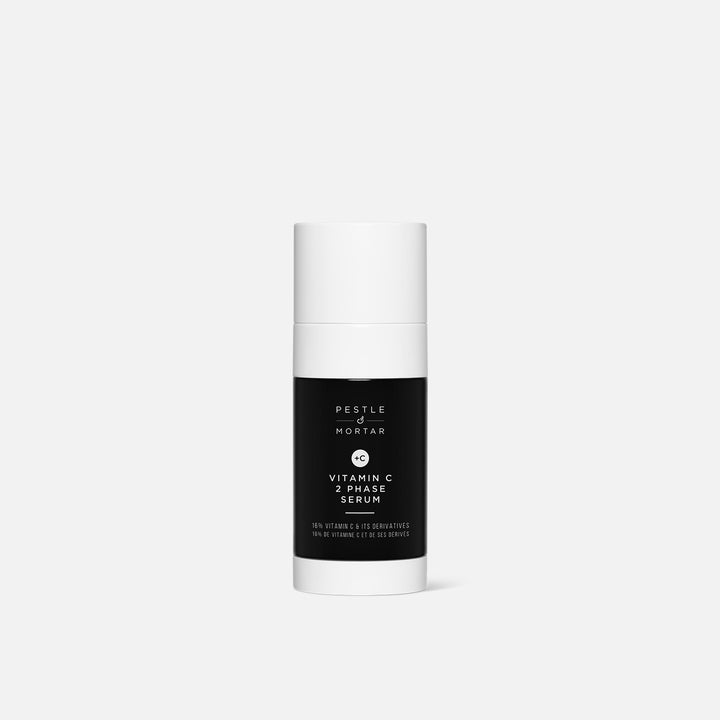
Vitamin C 2-Phase Serum is designed for consistent, daily use — even on sensitive skin.
- 16% stabilised Vitamin C in three gentle forms
- A two-phase delivery system that keeps actives fresh until you pump
- No oxidation, no irritation, no sticky residue
Just stable, effective brightening that works with your skin’s natural cycle. One pump. Every morning. Four weeks to see the difference for yourself.