
Your routine has not changed. You are using the same products, in the same order, morning and night. But something feels different.
Your skin looks red. It feels sensitive. Products that used to absorb easily now seem to sit on the surface. Nothing is behaving the way it normally does.
Before you replace your routine entirely, pause. Sometimes the issue is the products. But often, it is the condition of your skin barrier that determines how those products perform.
What is your skin barrier and what does it do?
Your skin barrier is the outermost layer of your skin. It is made up of skin cells, lipids, and natural oils that work together to perform two essential functions.
It keeps moisture in.
It keeps irritants out.
When the barrier is healthy, your skin feels comfortable. It holds onto hydration, tolerates active ingredients well, and looks calm and even.
When the barrier is compromised, that protection weakens. Water escapes more easily. Environmental stressors penetrate more easily. Skin becomes reactive to products it previously tolerated without issue.
If your skincare routine suddenly feels like it has stopped working, your barrier is often the missing piece.
Sign 1: Your skin stings when you apply products
This is one of the earliest and most common signs of barrier stress.
Products you have used for months without issue suddenly sting, tingle, or burn on application. Even formulas that are usually gentle feel uncomfortable.
When the barrier is weakened, it is no longer filtering ingredients effectively. Ingredients penetrate more quickly than intended, triggering irritation.
It does not always mean the product is wrong for you. It often means your skin is not in the right condition to receive it.
Until the barrier recovers, even well-formulated active ingredients can feel too strong.

Sign 2: Persistent redness that is not linked to a clear trigger
Everyone experiences temporary redness from heat, exercise, or trying something new. That is normal.
Barrier-related redness is different. It tends to be constant and difficult to trace to a single cause. Your skin may look flushed across the cheeks, nose, or forehead most of the time, even when you have not changed anything in your routine.
When the barrier is compromised, everyday stressors such as pollution, temperature changes, or even tap water can trigger irritation. Without adequate protection, the skin remains in a low level state of inflammation.
It is not always dramatic. Often it is subtle but persistent.
Sign 3: Your skin feels dry no matter what you apply
This is where barrier damage and dehydration overlap.
Your skin feels tight, rough, or uncomfortable. You apply moisturiser and it helps briefly, but the feeling returns within hours.
When the barrier is weakened, your skin is not just lacking water. It is struggling to retain it. Moisture is applied, but it escapes because the structure that should seal it in is not functioning properly.
This is why switching moisturisers repeatedly rarely solves the problem. Until the barrier is supported, no product can perform at its best.

What damages the skin barrier?
The most common causes are over-exfoliation, harsh cleansing, and layering too many active ingredients at once.
Retinoids, AHAs, BHAs, and vitamin C are all effective ingredients. But using them too frequently or combining them aggressively without recovery time can weaken the barrier over time.
Environmental stress also plays a role. Cold weather, dry air, and prolonged exposure to heating or air conditioning all increase water loss from the skin.
Sometimes the issue is not what you are using, but what you are not using. Skin needs consistent hydration and barrier-supporting ingredients to stay resilient.
Ingredients such as panthenol help reinforce the barrier and improve moisture retention. Hyaluronic acid supports hydration at multiple levels of the skin. Soothing extracts like aloe vera and cucumber help calm visible irritation while the barrier recovers.
How to support your skin barrier
Repairing a compromised barrier does not require a complicated routine. In most cases, it requires less.
Simplify.
Start with a gentle cleanser that does not leave your skin feeling tight.
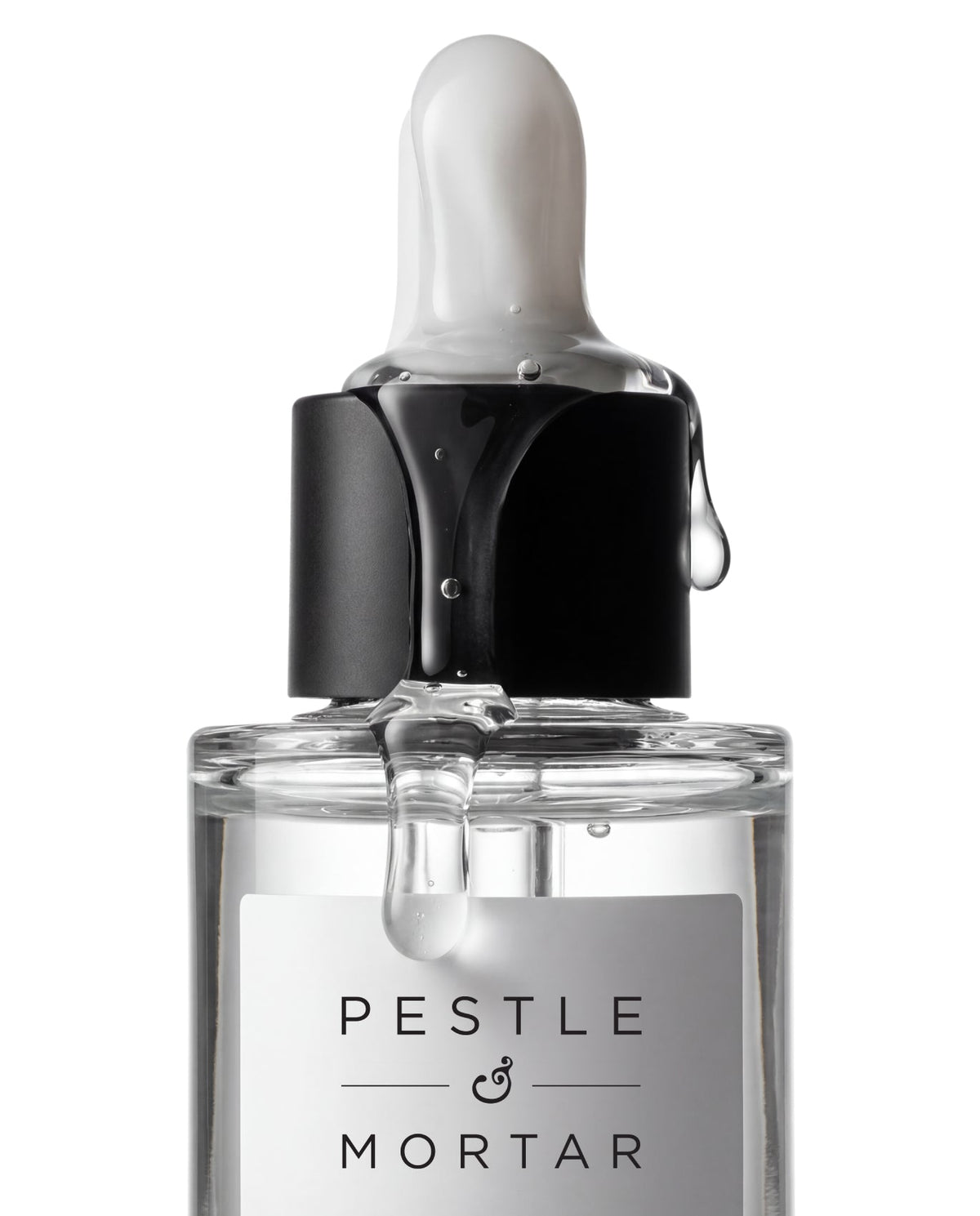
Apply a lightweight hyaluronic serum to damp skin to replenish water levels. Look for formulas that combine hyaluronic acid with barrier-supporting ingredients such as panthenol to strengthen while they hydrate.
Follow with a moisturiser to seal in hydration and protect the surface.
Pause exfoliation until your skin feels consistently calm. When you reintroduce active ingredients, do it slowly and one at a time. Pay attention to how your skin responds.
The goal is not to add more products. It is to restore balance.
When your barrier is healthy, your skin feels different. It feels comfortable after cleansing. It tolerates active ingredients. Hydration lasts throughout the day.
Sometimes what your skin needs most is time, simplicity, and the right support to rebuild its barrier properly.
Once that foundation is restored, everything else begins to work again.