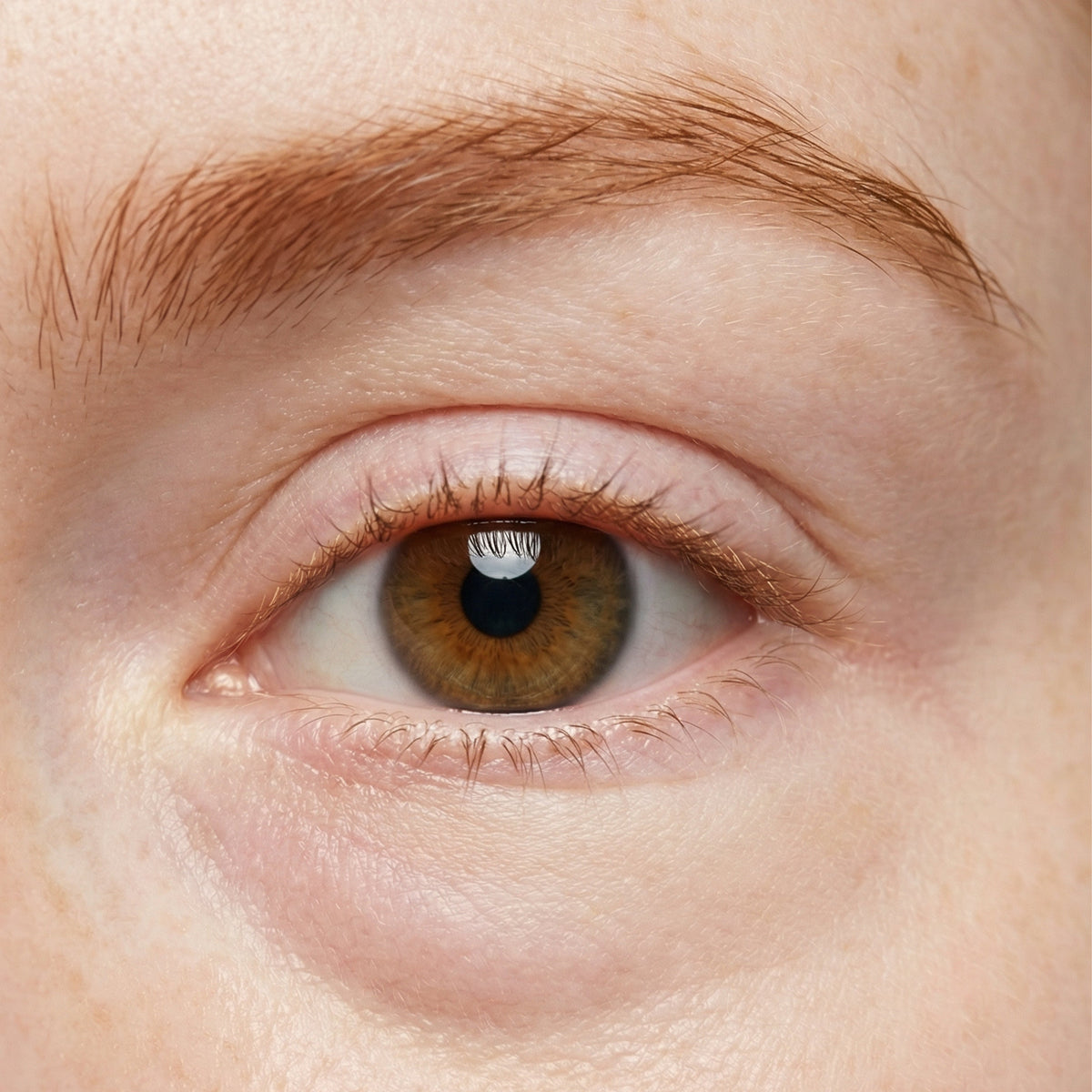
Your under-eyes often show what's going on before the rest of your face catches up. Puffiness, dark circles, dryness, fatigue are signals. And once you understand what's actually happening, you can give this delicate skin what it needs.
Puffy
Puffiness is usually about fluid. While you sleep, fluid can accumulate in the tissues around your eyes — especially if you sleep flat, ate something salty, had alcohol, or you’re prone to water retention. Allergies and sinus congestion can also cause swelling in this area.
What helps is anything that encourages fluid to move. Cooling constricts blood vessels and helps reduce swelling. Gentle massage and lymphatic drainage can also make a difference. Sleeping slightly elevated helps prevent fluid pooling overnight.
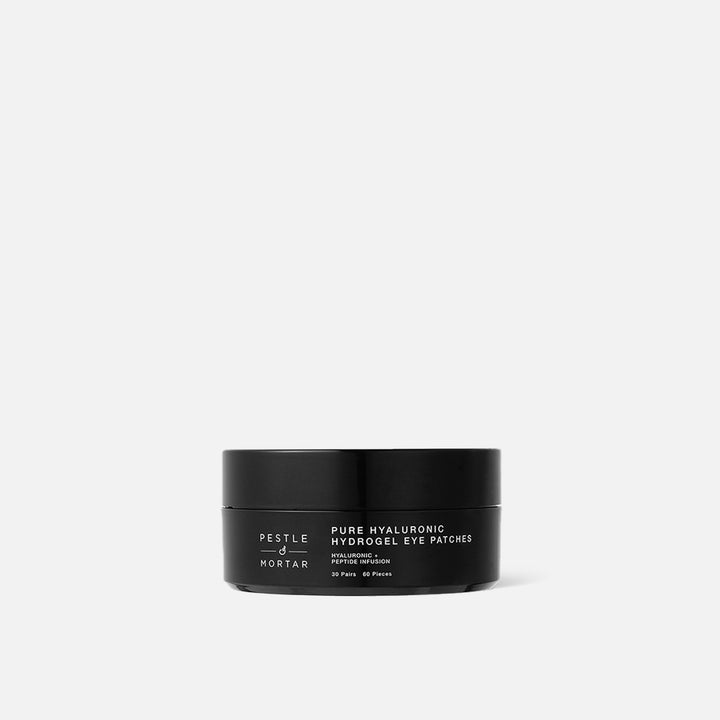
Hydrogel eye patches stored in the fridge will give a cooling effect on contact. The gentle pressure of the patch against the skin can also help encourage fluid away from the area, leaving under-eyes looking calmer and less swollen.

Dark circles
Dark circles are more complex because they have multiple causes. For many people, they’re genetic — the skin under the eyes is so thin that blood vessels simply show through more visibly. Darker skin tones may also experience hyperpigmentation in this area.
Fatigue makes dark circles worse because when you’re tired, skin becomes paler, making the contrast more obvious. Dehydration does the same — when skin lacks moisture, it looks dull and shadows appear deeper.
What helps depends on the cause. Hydration plumps the skin and reduces that hollow, shadowed look. Brightening ingredients can help with pigmentation over time. But for most people, keeping this skin well-hydrated and calm is the simplest way to reduce their appearance.
Hydrogel patches deliver concentrated hydration directly to the under-eye area, helping skin look plumper and more even. The cooling effect can also help reduce the appearance of darkness caused by visible blood vessels.

Dehydrated
The skin under your eyes produces very little oil compared to the rest of your face. That means it loses moisture faster and has less natural protection against dryness. Screen time makes it worse — hours of concentrated focus reduce how often you blink, which increases moisture loss around the eyes.
When this skin is dehydrated, it looks crepey. Fine lines appear deeper. Everything looks a bit dull and tired.
What helps is hydration that actually stays in place. Hyaluronic acid is one of the most effective ingredients for this area because it draws water into the skin and holds it there. Multi-weight hyaluronic acid works at different depths — smaller molecules penetrate to replenish moisture, while larger molecules sit closer to the surface to lock hydration in.
Hydrogel patches act as a delivery system, holding hydrating ingredients against the skin for several minutes so they have time to absorb properly. Unlike a serum that absorbs in seconds, patches create a seal that prevents moisture from evaporating — giving dehydrated under-eyes the sustained hydration they need.

Tired
Tired-looking eyes are usually a combination of everything above — a bit puffy, a bit dry, a bit dull. But eye strain plays a role too. Hours of screen time, squinting, and concentrating all creates tension around the eyes that shows up as fatigue.
Stress compounds the effect. When you’re stressed, blood flow changes, sleep suffers, and skin doesn’t repair as efficiently overnight. The under-eye area, being the thinnest and most delicate, shows it first.
What helps is giving this skin a reset. Cooling soothes tension. Hydration restores what’s been lost. Calming ingredients like cucumber and aloe reduce irritation and redness.
A few minutes with a cooling, hydrating patch can help tired eyes look noticeably more awake and refreshed because you’ve given this skin a moment of support it doesn’t usually get.
How to make the most of eye patches
Eye patches are designed to be applied to clean skin, before eye cream. Eye creams are typically more occlusive, meaning they sit on the surface of the skin and create a protective layer. That’s exactly what you want them to do, but if that layer is already there when you apply your patches, it acts as a barrier between the hydrogel and your skin.
The ingredients in eye patches — hyaluronic acid, peptides, cucumber, aloe — need direct contact with the skin to absorb effectively. The hydrogel format works by holding these ingredients against the under-eye area for several minutes, giving them time to penetrate. If there’s a layer of cream in the way, that delivery is restricted.
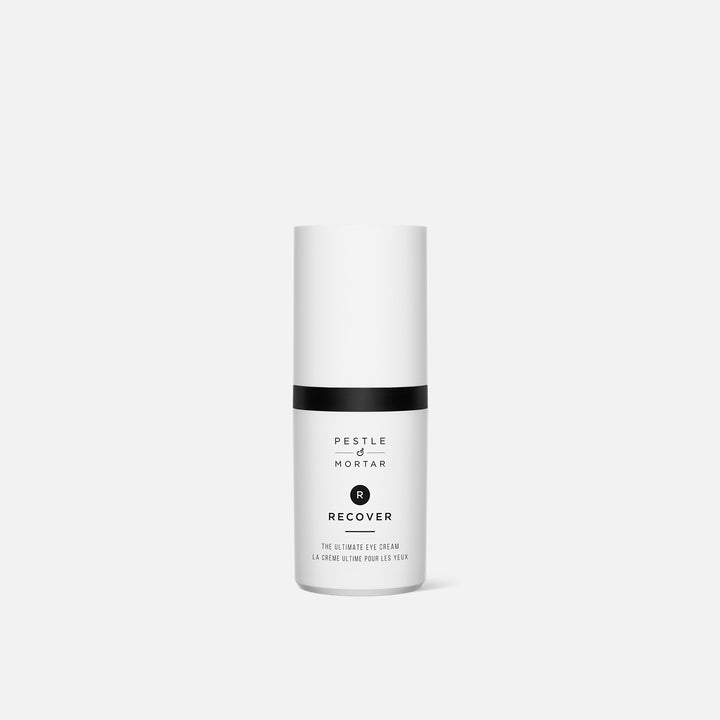
Eye cream comes after. Once the patches are removed and you’ve patted in any remaining serum, an eye cream seals everything in, locking hydration into the skin and adding an extra layer of protection.